
Skip to content

What are skin tears? Understanding a common yet overlooked wound

Skin tears are a common but often unrecognised type of wound, especially among older adults and people with fragile skin. Skin tears can be quite painful and distressful and despite their frequency, they are often misdiagnosed or ignored. This can lead to complications that could have been avoided with early recognition and care.¹

In this article, we’ll explore what skin tears are, how they happen, and why they matter, for both individuals and healthcare systems.
Skin tears: more than just a cut

A skin tear is a traumatic wound caused by mechanical forces, including removal of adhesives and patient handling, the depth of which may vary (not extending through the subcutaneous layer)¹. Skin tears are specific injuries not to mix up with lacerations or cutaneous laceration. They are initially acute wounds¹ and usually heal within 14–21 days, depending on the size and depth². In cases of delayed wound healing, a skin tear can develop into a complex chronic wound³.

How and where do skin tears happen?

Skin tears typically result from¹:

  • Mechanical forces (e.g. shear and friction)
  • Trauma (e.g. dressing/adhesive removal or bumping into objects)
  • Improper patient handling

While normal skin can withstand most impacts, less force is required to cause a skin tear in individuals with fragile skin¹. Depending on the circumstance, the skin may separate partially or fully:

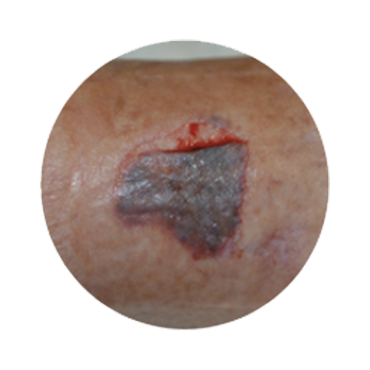
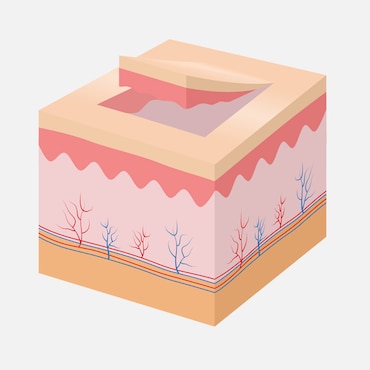
In a partial thickness wound, the epidermis is separated from the dermis.

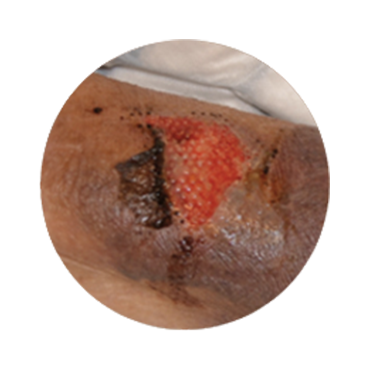
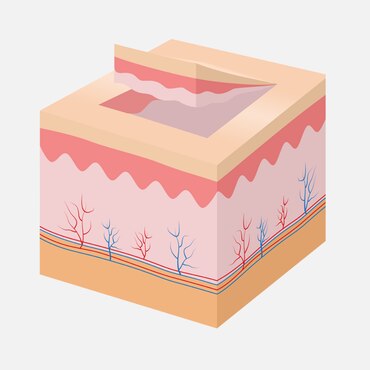
In a full thickness wound, both the epidermis and dermis are separated from underlying structures.

Partial thickness wound

Partial thickness wound

Skin tears can occur anywhere on the body¹,³ but the areas most prone to skin tears are the outer forearms, elbows, and hand dorsum. They are also often seen on lower limbs, like the calves and shins.⁶

How are skin tears classified?

The International Skin Tear Advisory Panel (ISTAP) classifies skin tears into three types¹:

Type I: no skin loss

Linear or flap tear which can be repositioned to cover the wound bed.

Type II: partial flap loss

Partial flap loss which cannot be repositioned to cover the whole wound bed.

Type III: total flap loss

Total flap loss exposing the entire wound bed.

Who is most at risk of developing skin tears?

Skin tears can happen to anyone, but certain groups are especially vulnerable due to age, skin condition, or medical factors.

Those more vulnerable include:

  • Newborns, whose skin is still developing:
    A newborn's dermis is not fully developed and has approximately 60% of the thickness of adult skin. The skin is less elastic and more prone to damage by shear forces⁴.
  • Older adults, whose skin becomes more fragile with age:
    Due to skin changes in older adults, their skin is more vulnerable to skin tears. They are also at the highest risk of developing infections and comorbidities, which can cause skin tears to be a complicated wound or may develop into a chronic wound¹. This risk is especially high in care settings, where frequent handling, dressing changes, and medical interventions can increase the likelihood of skin trauma.

What is the impact of skin tears on healthcare?

Skin tears aren’t just a medical concern. They can have a negative impact on the health care system by causing high material and labor costs, an increased workload for caregivers as well as prolonged hospital stays. The full extent of the practical and financial burden to healthcare systems is not fully known, as skin tears are frequently underreported or misdiagnosed¹. But when left unaddressed, these wounds can escalate, leading to longer recovery times, more complex care needs, and increased pressure on staff and budgets.

That’s why education and a strong multidisciplinary team matter. Giving clinicians the right skills to spot risks and protect skin integrity–supported by nurses, aides, and allied health professionals–helps prevent complications and improve outcomes¹.

Skin tear FAQ for patients and relatives

Yes, skin tears typically result from trauma such as bumping into objects¹. Thin elderly skin can tear easily from minor bumps due to loss of elasticity and collagen.
Pad sharp corners and remove furniture that could cause bumps or scrapes. Also removing any potentially dangerous furniture can help reduce the risk of getting a skin tear¹.
  • Use pH-balanced cleansers and moisturisers to help maintain skin integrity and avoid irritation. Skin tear incidence can be reduced by 50% if a moisturizer is applied twice daily⁹.
  • Bathing routine: reduce bathing and showering as it makes skin dryer. Use soap free non-rinse and/or pH neutral skin cleaners.
  • Clothing: Protect the skin by wearing long pants/ trousers, knee-high socks and tops with long sleeves¹

If your parent experiences a skin tear, it's important to first consult a healthcare professional to ensure proper assessment and treatment. Once a doctor has evaluated the wound, choosing the right dressing is key to promoting healing and to help reduce the risk of further skin damage and infection. When you select a wound dressing for skin tears, look for products with an atraumatic adhesive (e.g. silicone-based). They are easy to apply and remove and help to protect fragile skin from further harm.¹

Regular plasters that are made with rubber or acrylic adhesive may stick too hard and cause damage to fragile, thin skin. The risk of skin tears can be reduced by using adhesives with atraumatic removal properties. Silicone-adhesives are very gentle to the skin at removal and are a suitable choice for very sensitive and fragile skin.

Good application and removal techniques are essential, as pressure and tension from the application of a medical adhesive product or the mechanical force created during removal can cause a skin tear (also know as ‘MARSI’). Watch this video for a step-by-step guide on how to correctly remove plasters to help reduce the risk of causing further skin damage.

Skin tear FAQ for healthcare professionals

Yes. Both medications and external (extrinsic) factors can contribute to skin tear vulnerability. 1, 3, 7

Medications that may increase risk:

  • Anti-inflammatory agents
  • Anticoagulants
  • Chemotherapeutic agents
  • Long-term corticosteroid use

Environmental (extrinsic) factors:

  • Frequent dressing changes or fixation needs
  • Prolonged exposure to moisture
  • Radiation therapy
  • Photodamage (sun exposure)

Yes. Several internal (intrinsic) factors can increase the risk of skin tears, including 1, 3, 4, 5, 7, 8:

  • Dermatological conditions (Eczema, Dermatitis, Epidermolysis bullosa)
  • Medical conditions (Diabetes, Infections, Renal disease, other chronic illnesses)
  • Nutritional factors (Malnutrition, Dehydration)

You can reduce external (extrinsic) risks by making small changes in daily care and the environment, such as:

  1. Keeping fingernails trimmed and avoid wearing jewelry during care to prevent accidental scratches or trauma.
  2. Padding or removing potentially dangerous furniture to reduce the chance of bumps or trauma.
  3. Maintaining skin integrity by using pH-balanced skincare products that are gentle and help preserve the skin’s natural barrier.

A comprehensive list of precautions can be found in the ISTAP Best Practice Recommendations.

Leukoplast skin sensitive range

The Leukoplast skin sensitive range is specifically developed for patients with fragile or compromised skin. These dressings feature soft silicone adhesives that offer secure fixation with minimal trauma, making them a trusted choice for MARSI prevention.

Ready-to-use solutions

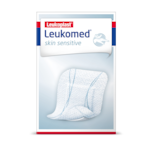
Leukomed® skin sensitive

Leukomed® skin sensitive

Absorbent wound dressing for sensitive or fragile skin

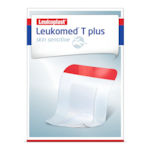
Leukomed® T plus skin sensitive

Leukomed® T plus skin sensitive

Waterproof wound dressing for those with fragile or compromised skin.

Tailor-made solution

Build your own individual solution using silicone adhesives – with the following products.

Fixomull® skin sensitive

Fixomull® skin sensitive

Atraumatic wide area fixation for dressings or devices on fragile or compromised skin.

Leukomed® T skin sensitive

Leukomed® T skin sensitive

Film to secure wound dressings on sensitive or compromised skin.

Read more

References

  1. Nokaneng E, et al. Best practice recommendations for the prevention and management of skin tears in aged skin. Wounds International. 2025. [link]
  2. Deprez J, et al. Measures that patients living in the community can take for the prevention and treatment of skin tears: A comprehensive review of the literature. Journal Of Wound Management. 2022;23(2):70–77.
  3. Idensohn P, et al. Skin tears: a case-based and practical overview of prevention, assessment and management. Journal of Community Nursing. 2019;33(2):32–41.
  4. Stephen-Haynes J & Carville K. Skin tears made easy. Wounds International. 2011;2(4):1–6.
  5. Ferris Mfg Corp. Skin tear clinical education. 2012:1–12.
  6. Fraser R, et al. Analysis of real-world data from North American skilled nursing facilities’ skin and wound records for skin tear prevalence, healing and treatment. Journal Of Wound Management. 2022;23(2):87–98.
  7. da Silva Torres F, et al. Development of a manual for the prevention and treatment of skin tears. Wounds. 2019;31(1):26–32.
  8. Winnipeg Regional Health Authority. Skin tears evidence informed practice tools. 2014; p. 1–11.
  9. Carville K, et al. The effectiveness of a twice-daily skin-moisturising regimen for reducing the incidence of skin tears. International Wound Journal. 2014; 11(4): 446-53.